ELOHIM'S RIGHT OF DESTRUCTION.
HOW WE MUST UNDERSTAND HOW YAHUAH WORKS

James 4:10 Humble yourselves in the sight of the Lord, and he shall lift you up.
James 4:11 ¶ Speak not evil one of another, brethren. He that speaketh evil of his brother, and judgeth his brother, speaketh evil of the law, and judgeth the law: but if thou judge the law, thou art not a doer of the law, but a judge.
James 4:12 There is one lawgiver, who is able to save and to destroy: who art thou that judgest another?
James 4:13 ¶ Go to now, ye that say, To day or to morrow we will go into such a city, and continue there a year, and buy and sell, and get gain:
James 4:14 Whereas ye know not what shall be on the morrow. For what is your life? It is even a vapour, that appeareth for a little time, and then vanisheth away.
James 4:15 For that ye ought to say, If the Lord will, we shall live, and do this, or that.
James 4:16 But now ye rejoice in your boastings: all such rejoicing is evil.
Many people ask why, if God is Elohim, He allows so much suffering, misery, and death. This question demands an answer. Exodus 19:5-6 states:
Exo 19:5 Now therefore, if ye will obey my voice indeed, and keep my covenant, then ye shall be a peculiar treasure unto me above all people: for all the earth is mine:
Exo 19:6 And ye shall be unto me a kingdom of priests, and an holy nation. These are the words which thou shalt speak unto the children of Israel.
The Earth belongs to God (Elohim). Everything we possess that sustains us is owned by the Most High. Thus, He has every right to do as He deems fit to fulfill His will, including His judgments.
In the Bible, Yahweh’s judgments and punishments are described in various ways and contexts, affecting humans, animals, and even nature itself. These judgments are often a response to sin, rebellion, or the breaking of God’s covenant and serve as both a corrective and a warning. Here are some primary methods through which Yahweh administers judgment:
1. Direct Divine Intervention
Plagues and Diseases: God sends diseases and plagues as a form of judgment, seen in the ten plagues of Egypt (Exodus 7–12) and instances where pestilence is sent upon Israel for disobedience (e.g., 2 Samuel 24:15).
Death and Sickness: Individuals are sometimes struck dead as a direct response to sin. For instance, Ananias and Sapphira die immediately for lying to the Holy Spirit (Acts 5:1–11), and Uzzah dies after touching the Ark of the Covenant (2 Samuel 6:6–7).
2. Natural Disasters
Flooding: The Great Flood, or Noah’s Flood, is perhaps the most well-known judgment by water (Genesis 6–9). This flood was a response to humanity’s widespread corruption and was intended to cleanse the earth.
Drought and Famine: Lack of rain and famine are judgments used by God to call people to repentance. For example, Elijah prays for a drought to punish Israel for idolatry (1 Kings 17:1), and God often warns Israel of drought as a consequence of disobedience.
Earthquakes and Fire: These are sometimes used to show God’s wrath and might (Numbers 16:31-35, when Korah and his followers are swallowed by the earth) or as punishments for idolatry and sin, such as the destruction of Sodom and Gomorrah by fire (Genesis 19:24-25).
3. Judgment through Warfare and Conquest
Defeat by Enemies: God sometimes permits Israel’s enemies to conquer or oppress them as punishment for their disobedience, such as the Babylonian captivity (2 Kings 24-25) and invasions by the Assyrians (Isaiah 10:5-6).
Exile: Exile is another significant punishment for covenant-breaking. The Babylonian exile, where the Israelites were taken captive and removed from their land, was a direct result of repeated idolatry and injustice (Jeremiah 25:11).
4. Curses and Loss of Blessings
Withholding of Blessings: God promises blessings for obedience and curses for disobedience. When the people of Israel stray, they experience the curses outlined in Deuteronomy 28, such as poor harvests, disease, and general hardship.
Generational Punishment: In some cases, sin impacts future generations, as seen in Exodus 34:7, where God speaks of visiting "the iniquity of the fathers upon the children and the children’s children to the third and the fourth generation."
5. Judgment of the Land and Animals
Destruction of Animals: Animals often suffer alongside humans when God brings judgment on a land, either through direct destruction (as in the plagues on Egypt, where livestock are afflicted and killed) or through famine, which affects the food chain (Joel 1:18-20).
Cursed Land: The land itself can be judged and become unfruitful as punishment for sin. For instance, in Genesis 3:17, the ground is cursed as part of Adam’s punishment, resulting in toil and hardship for humanity.
6. Mental and Spiritual Judgments
Confusion and Madness: God sometimes sends confusion or madness as a judgment. Deuteronomy 28:28-29 warns of madness, blindness, and confusion as consequences for disobedience.
Hardened Hearts: In some instances, God hardens individuals’ hearts, allowing them to persist in their sin as a form of judgment (as with Pharaoh in Exodus 9:12). This can lead to further sin and eventual destruction.
7. Judgment through Prophets and Leaders

Prophetic Warnings and Pronouncements: God frequently sends prophets to pronounce judgments, warning of impending consequences for sin and calling people to repentance. Jonah warns Nineveh, Elijah challenges Israel, and Jeremiah warns Jerusalem.
Covenant Enforcement by Leaders: God sometimes empowers leaders like Moses, Joshua, and the judges to enforce His covenant, which can include punishments or purges, such as when Moses commands the Levites to execute idolaters in Exodus 32.
8. Spiritual Death and Separation from God
Removal of God’s Presence: God sometimes withdraws His presence as a form of judgment. This spiritual consequence leaves people or nations vulnerable to moral decay and destruction (e.g., in Ezekiel 10, where God’s glory departs from the temple).
Eternal Judgment: The concept of eternal separation from God is also presented in the New Testament, where those who reject God face final judgment and separation from Him (e.g., the Lake of Fire in Revelation 20:15).
9. Final Judgment and Resurrection
Judgment Day: The Bible culminates with a final, comprehensive judgment of all humanity, as described in Revelation. God judges every individual, weighing their deeds, and ultimately separating the righteous from the unrighteous. This judgment is permanent and encompasses both humans and spiritual beings (Revelation 20:11-15).
Summary
Yahweh’s judgments cover a wide range of responses—from direct acts like plagues and natural disasters to more spiritual forms like confusion and hardened hearts. He judges humans, animals, and the land in ways that reflect His justice and desire for repentance, and each form of judgment serves both as a consequence and a call to return to a right relationship with Him. Let's examine God's judgment in relation to Adam and Eve, and also in the case of Cain and Abel.
Outline and Elaboration
1. Genesis 3:17 – The Curse on Adam and the Earth
"Because thou hast hearkened unto the voice of thy wife, and hast eaten of the tree... cursed is the ground for thy sake; in sorrow shalt thou eat of it all the days of thy life."
Context: This verse occurs after the fall of man when Adam and Eve have eaten the forbidden fruit, disobeying God's command. God declares a curse on the ground as a consequence of Adam’s disobedience, making human labor and survival difficult.
Key Point: The disobedience results in the earth being cursed, and Adam will face hardship and toil for his sustenance. This marks a shift in humanity's relationship with the earth, where once man ruled over it without hardship, now survival would come with sorrow and suffering.
2. Genesis 4:1 – The Birth of Cain
"And Adam knew Eve his wife; and she conceived, and bare Cain, and said, I have gotten a man from the LORD."
Context: This verse introduces the first human birth, that of Cain. Eve acknowledges the divine role in the birth of her son, recognizing God's gift of life.
Key Point: Eve attributes Cain’s birth to God’s blessing, highlighting the idea that even after the fall, life and procreation are still gifts from God. This sets up Cain’s eventual role in the narrative.
3. Genesis 4:2 – The Birth of Abel and Their Vocations
"And she again bare his brother Abel. And Abel was a keeper of sheep, but Cain was a tiller of the ground."
Context: The two brothers are introduced with distinct occupations. Abel is a shepherd, while Cain is a farmer.
Key Point: The roles of Cain and Abel reflect different aspects of humanity’s relationship with nature. Abel, as a keeper of sheep, represents a pastoral, nomadic lifestyle, while Cain, as a tiller of the ground, continues the laborious work imposed on Adam. This distinction foreshadows their differing offerings to God and the subsequent conflict.
4. Genesis 4:3-5 – The Offerings of Cain and Abel
"Cain brought of the fruit of the ground an offering unto the LORD... Abel, he also brought of the firstlings of his flock... And the LORD had respect unto Abel and to his offering: But unto Cain and to his offering he had not respect."
Context: Cain and Abel both bring offerings to the Lord, but God favors Abel's offering over Cain's.
Key Point: The text suggests that Abel’s offering, being of the “firstlings of his flock” and the “fat,” was of higher quality, indicating devotion and sacrifice. Cain’s offering, by contrast, seems to lack such dedication. The respect shown to Abel's offering and the rejection of Cain’s sets the stage for Cain’s anger and envy.
5. Genesis 4:6-7 – God's Warning to Cain
"Why art thou wroth? and why is thy countenance fallen? If thou doest well, shalt thou not be accepted? and if thou doest not well, sin lieth at the door..."
Context: God addresses Cain’s anger and warns him that sin is waiting to take control if he does not act rightly.
Key Point: God offers Cain an opportunity for repentance, implying that his offering was not rejected due to arbitrary reasons but because of his lack of righteousness. The image of sin “lying at the door” suggests that Cain is on the verge of a moral fall, but still has the power to overcome it.
6. Genesis 4:8 – The Murder of Abel

"Cain talked with Abel... Cain rose up against Abel his brother, and slew him."
Context: Despite God’s warning, Cain’s jealousy and anger consume him, leading him to murder Abel.
Key Point: This is the first murder in human history, representing the destructive power of unchecked sin and the breakdown of brotherly relations. The act is a profound consequence of Cain’s internal conflict and refusal to master his sin.
7. Genesis 4:9-10 – God's Confrontation with Cain
"Where is Abel thy brother?... the voice of thy brother's blood crieth unto me from the ground."
Context: God confronts Cain about Abel’s whereabouts. Cain denies responsibility, famously asking, “Am I my brother’s keeper?” God reveals that Abel’s blood cries out for justice from the ground.
Key Point: This interaction shows Cain’s evasion of responsibility, contrasting with Abel’s blood symbolizing the demand for justice. The “cry” of Abel’s blood from the ground indicates that life and death are not forgotten before God, and that bloodshed calls for divine retribution.
8. Genesis 4:11-12 – Cain's Curse
"Now art thou cursed from the earth, which hath opened her mouth to receive thy brother's blood... When thou tillest the ground, it shall not henceforth yield unto thee her strength; a fugitive and a vagabond shalt thou be..."
Context: God pronounces a curse upon Cain, cursing him to a life of wandering and fruitless labor.
Key Point: The earth, already cursed due to Adam’s sin, now becomes even more hostile to Cain. His identity as a farmer is shattered, and he is condemned to a life of exile, both physically and spiritually alienated from the earth and God.
9. Genesis 4:13-14 – Cain's Lament
"My punishment is greater than I can bear... thou hast driven me out this day from the face of the earth; and from thy face shall I be hid..."
Context: Cain laments the severity of his punishment, fearing that he will be killed by others as he wanders.
Key Point: Cain’s complaint reflects the overwhelming consequences of his actions. He is not only physically exiled but also feels spiritually cut off from God. His fear of retribution from others shows the beginning of a cycle of violence and fear that his sin has unleashed.
Overall Themes and Insights:
Sin and Its Consequences: The narrative reveals the rapid escalation of sin, from disobedience to jealousy, and ultimately to murder. It emphasizes how unchecked sin can spiral into greater and more destructive actions.
Justice and Mercy: God’s response to Cain balances justice and mercy. Though Cain is cursed, God does not immediately destroy him but rather allows him to live, though in exile. This introduces the concept of punishment that does not fully strip away God’s protection.
Brotherhood and Responsibility: Cain’s infamous question, “Am I my brother’s keeper?” underscores a theme of responsibility and the failure to care for one another. The rejection of this responsibility leads to tragedy.
You said:
WHAT IS THE DIFFERENCE ADAM CURSED IN THE GROUND IN GENESIS 3:17 AND CAIN'S CURSED FROM THE EARTH CURSE IN GENESIS 4:11-12?
ChatGPT said:
ChatGPT
The curse placed on Adam in Genesis 3:17 and the curse placed on Cain in Genesis 4:11-12 are related but distinct in their severity and implications. Here’s a breakdown of the differences:
1. Adam’s Curse in Genesis 3:17-19:
Text: “Cursed is the ground for thy sake; in sorrow shalt thou eat of it all the days of thy life... In the sweat of thy face shalt thou eat bread, till thou return unto the ground.”
Nature of the Curse:
The ground is cursed: As a result of Adam’s disobedience (eating the forbidden fruit), the ground itself is cursed. This means that the earth, which had been productive and bountiful in Eden, would now yield its fruits only through hard labor.
Struggle for sustenance: Adam will still be able to grow food, but it will be with difficulty and toil. The ground will produce “thorns and thistles,” symbolizing the new hardships humanity must endure to survive. While survival is possible, it will require intense physical labor.
Human mortality: Adam’s curse ends with the pronouncement of death—he will return to the ground (symbolizing human mortality), which completes the punishment for disobedience.
Scope:
A general curse on humanity: Adam’s curse affects not only him but all of humanity. It is a universal curse on human labor and survival, reflecting the consequences of sin and the altered relationship between humans and the earth.
2. Cain’s Curse in Genesis 4:11-12:
Text: “Now art thou cursed from the earth, which hath opened her mouth to receive thy brother's blood... When thou tillest the ground, it shall not henceforth yield unto thee her strength; a fugitive and a vagabond shalt thou be in the earth.”
Nature of the Curse:
Cursed from the earth: Cain is cursed from the earth, specifically tied to the shedding of Abel’s blood. This is a much more severe and personal curse than Adam’s. The ground, which had already been cursed for Adam, now rejects Cain even further.
Complete rejection by the earth: While Adam could still toil the earth for food, Cain is denied even this. The ground will not yield its produce for him, making it impossible for Cain to rely on farming, which had been his vocation.
Fugitive and wanderer: Cain’s curse includes a punishment of restlessness and exile. He is condemned to wander the earth, no longer able to settle and make a living from the soil. This wandering reflects a deeper spiritual and physical alienation from the earth, from his community, and from God.
Scope:
A specific curse on Cain: Unlike Adam’s curse, which applies to all humanity, Cain’s curse is personal and tied to his specific act of murder. The curse reflects God’s judgment on Cain for shedding innocent blood and reveals a further estrangement from the earth and from God’s favor.
Summary of Differences:
Aspect
Adam’s Curse (Genesis 3:17-19)
Cain’s Curse (Genesis 4:11-12)
Cause
Disobedience by eating the forbidden fruit
Murder of Abel, shedding of innocent blood
Scope
Affects all humanity (universal)
Affects Cain personally (individual)
Impact on the Ground
The ground is cursed, making labor for food difficult but possible
The ground rejects Cain completely, denying him sustenance
Ability to Farm
Adam can still farm, but with great difficulty
Cain cannot farm at all; the ground will not yield to him
Exile
No explicit exile for Adam; he remains on earth but labors hard
Cain is made a fugitive and a wanderer on the earth
Alienation
Humanity’s relationship with nature is strained but not severed
Cain is fully alienated from the ground and society
Spiritual Consequence
General consequence of sin on humanity, mortality introduced
Deeper alienation from God, marked by Cain’s restless life
Key Insight:
Adam’s curse marks a general consequence for all humanity’s disobedience, introducing labor, hardship, and mortality into the human experience. The earth is cursed, but still provides sustenance through hard work.
Cain’s curse, on the other hand, is a more severe, personal punishment that intensifies the consequences of sin. The earth, which had already been cursed for Adam’s sake, now becomes completely hostile to Cain, denying him any sustenance, and he is condemned to a life of exile and wandering, highlighting his alienation from both the earth and his fellow human beings.
The difference lies in the severity and scope of the curse: while Adam’s curse affects humanity’s relationship with the earth, Cain’s curse represents a complete rejection, emphasizing the gravity of murder and the shedding of innocent blood.
KELVIN L. STUBBLEFIELD IS A GRADUATE OF Middle Tennessee State University IN 1983.
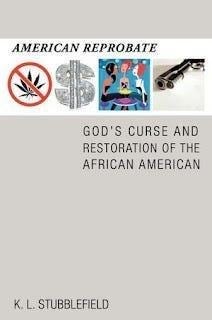
HE IS THE AUTHOR OF “AMERICAN REPROBATE: GOD'S CURSE AND RESTORATION OF THE AFRICAN AMERICAN”. THAT WAS PUBLISHED IN 2012

HE AND HIS WIFE SANDRIA CO-FOUNDED “BIGSTUB CREATIONS” IN 2018. We are a vehicle for creativity! Our mission is to encourage individuals to utilize their artistic expression through the performing arts.
He recently published his second book in November 2023.

STAYING HUMAN: EXAMINING THE RELATIONSHIP BETWEEN GOD, MAN AND ARTIFICIAL INTELLIGENCE”.
Biblical, Spiritual, and Social Analysis and Solutions to Black Americans and Mainstream AMERICAN Dysgenics, Narcissistic Self Indulgence, and the Current Politics of Self Annihilation. Amidst the dawning of Artificial General intelligence and Trans-Humanity.
YOU CAN PURCHASE HIS PUBLICATIONS OR LEARN ABOUT OUR NEXT PROJECT, YOU CAN VISIT THE FOLLOWING WEBSITES
https://www.klstubblefield.com/
https://www.bigstubcreations.com/
https://loveintheblack.blogspot.com/
https://lovingmyhumans.blogspot.com
https://kelvinstubblefield.substack.com/publish/post/147765776
CASHAPP DONATIONS: $bigstub
Thanks for reading Kelvin’s Substack! Subscribe for free to receive new posts and support my work.
Subscribed
JOIN KELVIN'S FIGHT TO STAY HUMAN! is a reader-supported publication. To receive new posts and support my work, consider becoming a free or paid subscriber.
Subscribed


No comments:
Post a Comment